Discuss Your District's Needs
Local business marketing and customer retention

Turn Visitors to Your District Into Returning Customers.

Connect visitors as Kakao friends and district members, then bring them back with tailored benefits and messages.

A district revitalization solution for local governments, merchant associations and district operators

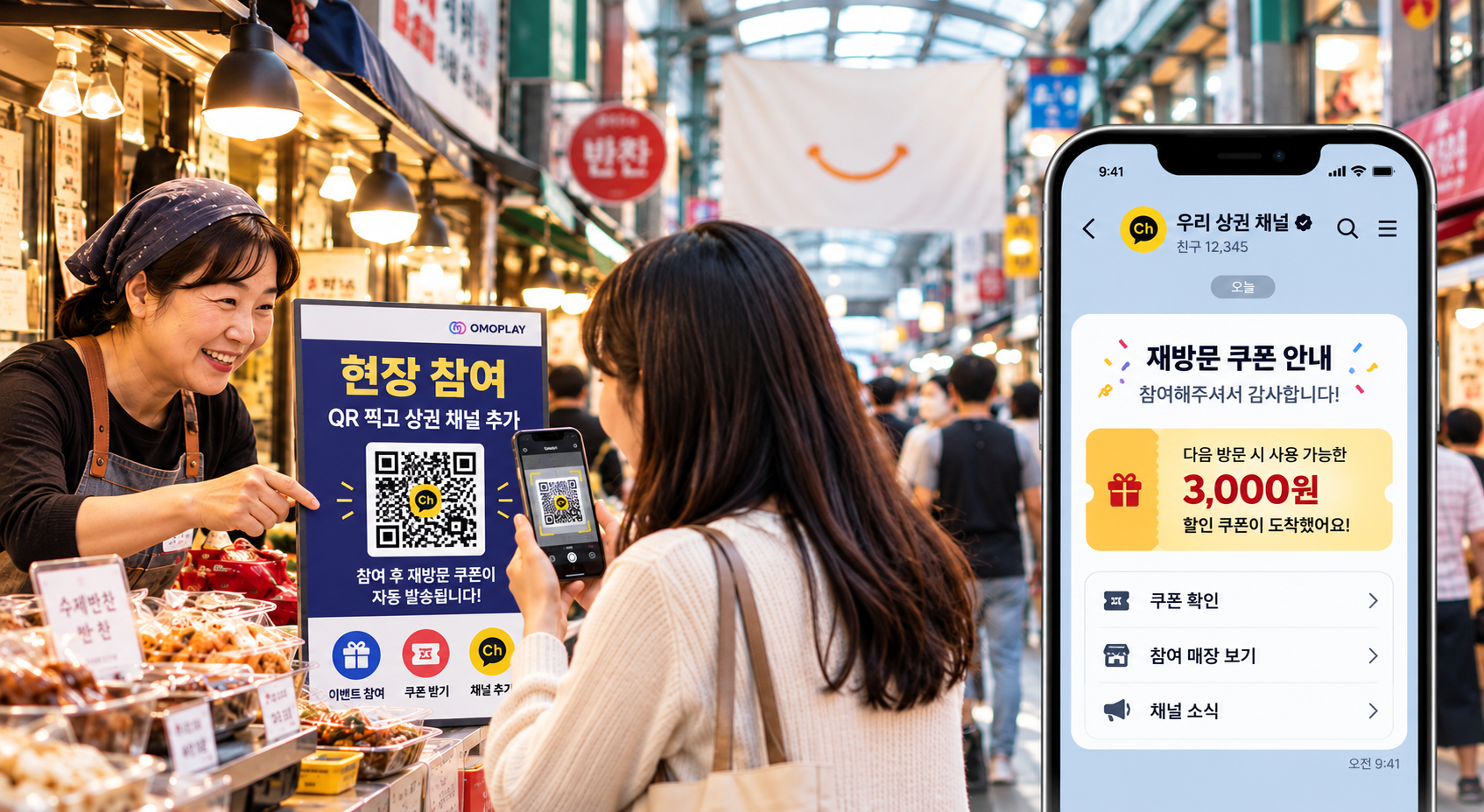
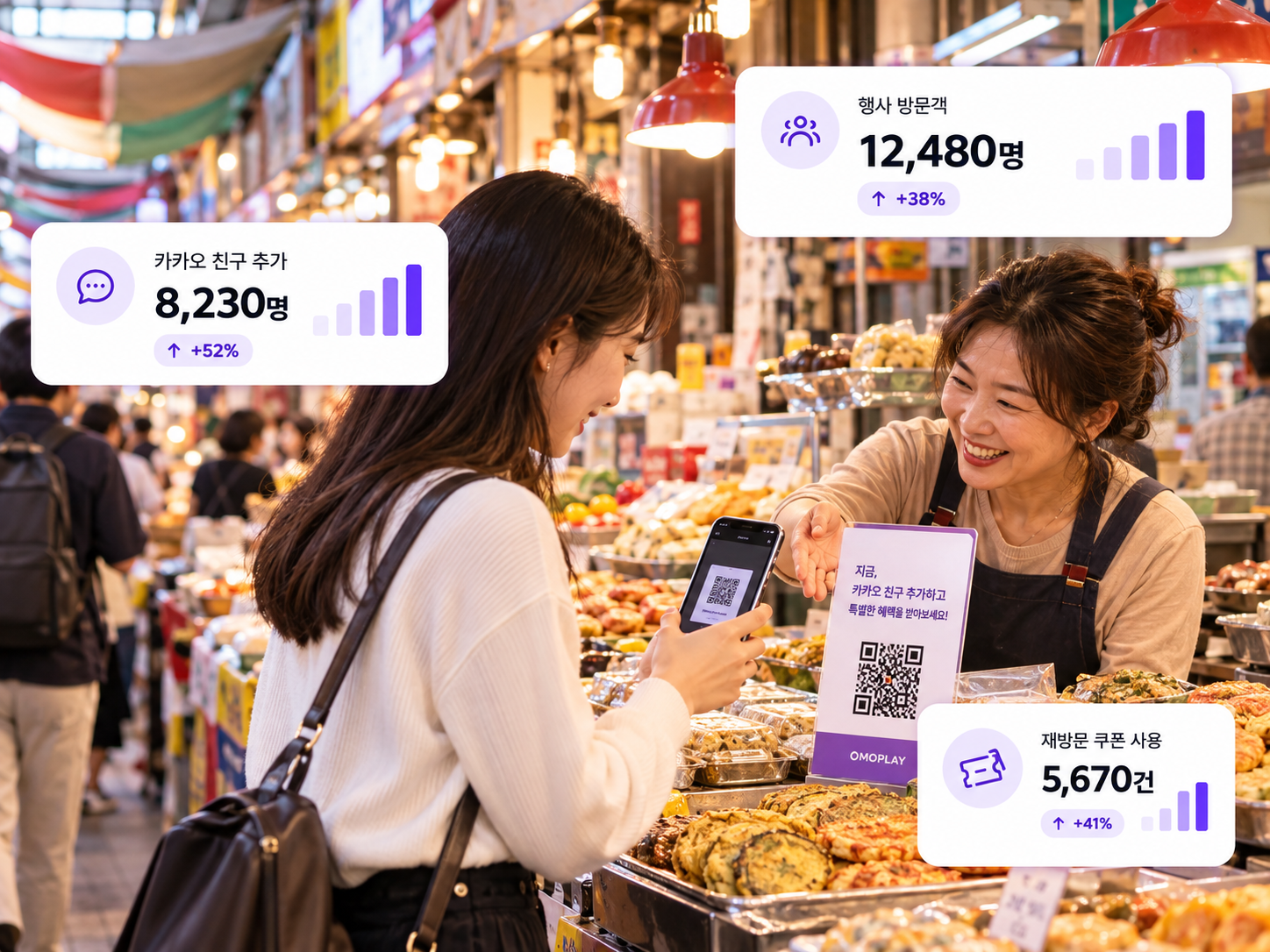
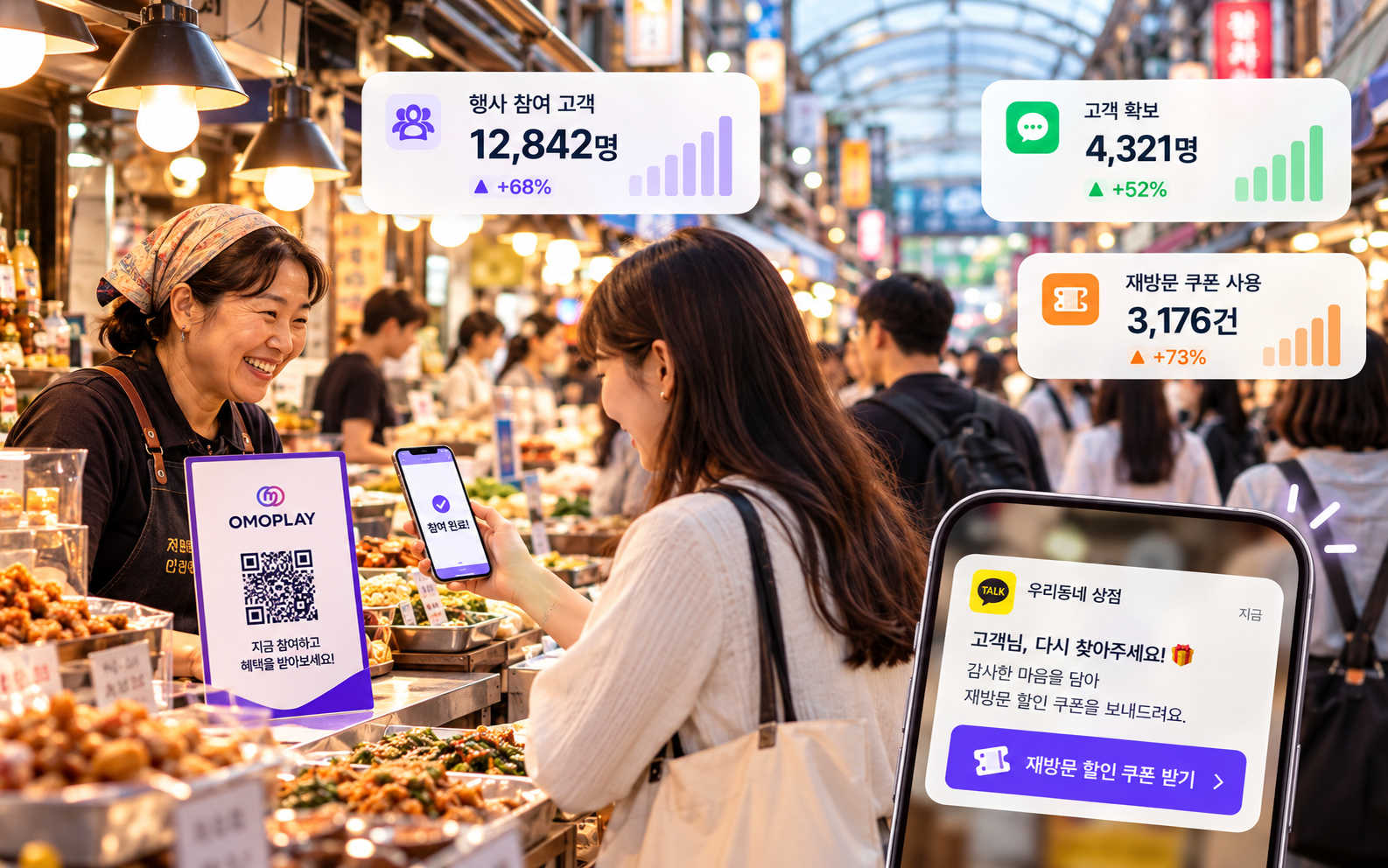
Service illustration of market visitors joining by QR, connecting to a channel and receiving return coupons. Metrics in the image are not actual operating results.
From On-Site Encounters to Future Visits.

Beyond a Single Event

When the event ends, the customer connection continues.

OMOPLAY turns on-site participation into customer acquisition, with consent-based follow-up messages, benefit management and participation tracking.

Event-focused operations

The event-day workflow

Attract visitors, run the event and offer benefits. Staying connected afterward requires a separate plan.

  1. Attract Visitors
  2. Run the event
  3. Provide benefits
  4. Close the event
What happens after the event?

Plan follow-up benefits and customer management together.

OMOPLAY integrated operations

Connected beyond the event

Connect participants as Kakao friends or members and share follow-up messages and benefits. Review participation and use to plan the next joint campaign.

  1. Visitor Participation

    Join through on-site events and QR codes

  2. Acquire friends and members

    Connect a Kakao Channel and confirm consent

  3. Share follow-up benefits

    AI copywriting and messages by condition

  4. Drive Return Visits

    Give customers a reason to return

  5. Performance report

    Review participation and benefit-use metrics

  6. Next joint marketing campaign

    Use results to plan the next event

A cycle that leads to the next visit

Participating storesStore-level overview
Event ParticipationParticipation records
KakaoTalk Channel FriendsChannel connections
Member acquisitionCustomers who consented
Follow-Up OffersIssuance and redemption
Estimated Purchases from Return VisitsOpen calculator
Merchant associations and operators
Useful beyond the event: an opted-in customer base
Participating stores
A reason for customers to return: specific follow-up benefits
Local governments and project managers
Measure participation and benefit use: project performance
Three Ways to Grow Your District

From joint market campaigns to the next customer visit.

Acquire district members through joint marketing for traditional markets and neighborhood streets, then connect it to return-visit marketing and performance management.

01 / Visitor acquisition and spending

Turn passing visitors into participating customers.

Turn visitors attracted by traditional-market joint marketing and local spending events into participants and customers. Track participation and benefit use by store.

  1. On-site participation
  2. Customer acquisition
  3. Offers Redeemed
A market merchant guides a visitor through QR participation, district-channel connection and a return-coupon message
02 / Returning customer management

Give first-time customers a reason to return.

Customer management starts with consent. Share return-visit benefits and coupon messages, and track issuance and redemption.

  1. Connect customers
  2. Return-visit benefits
  3. Track redemption
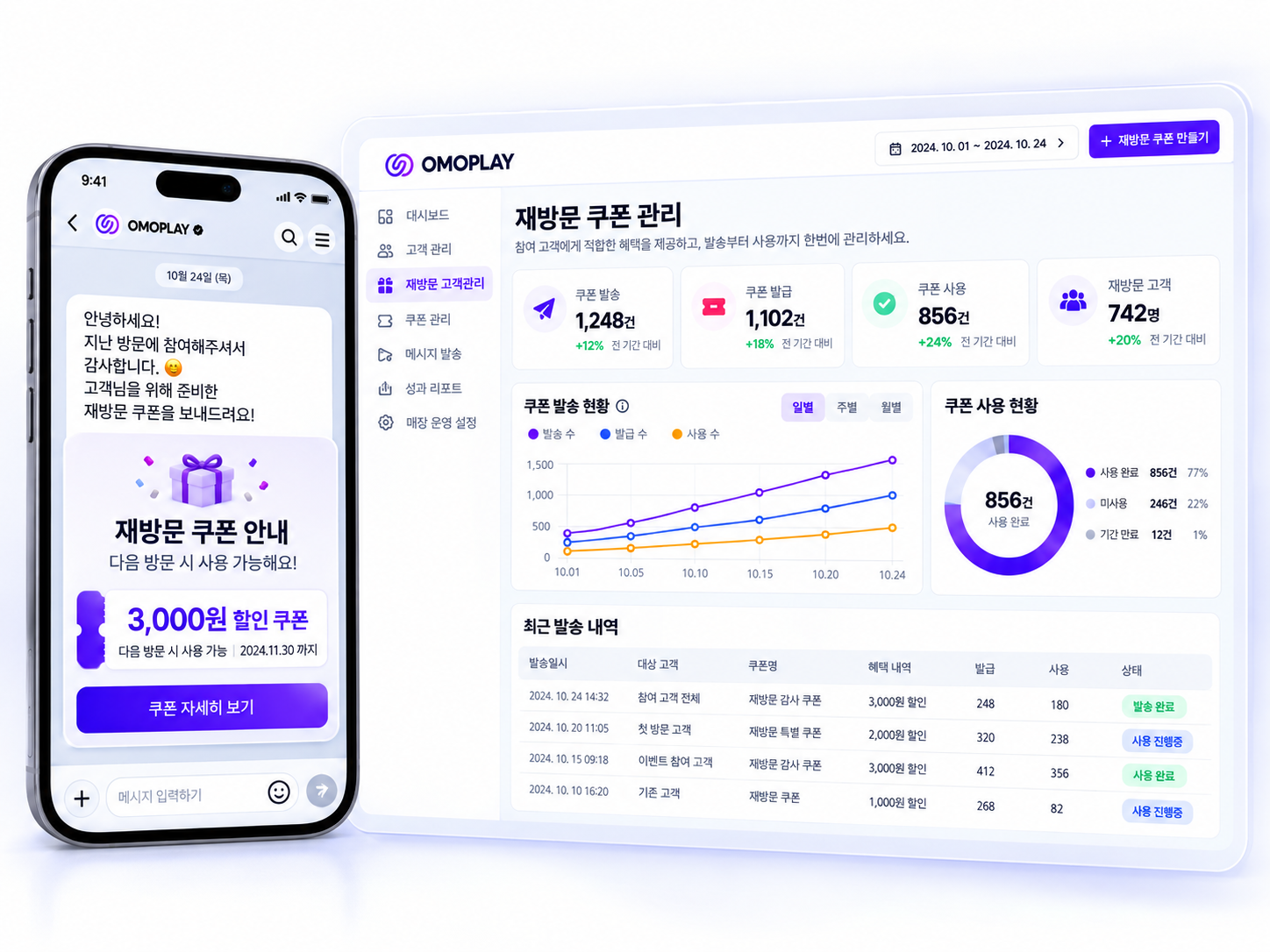
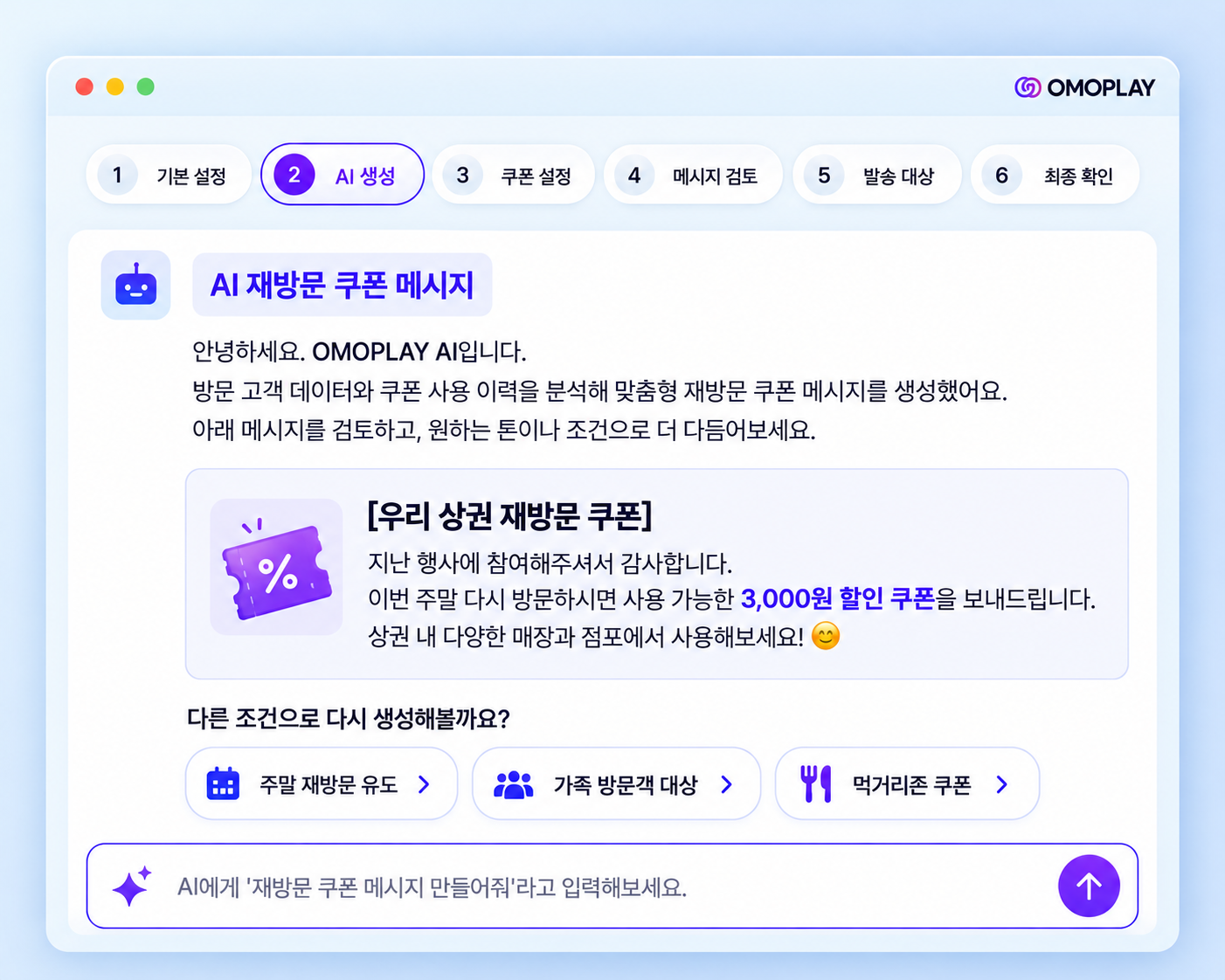
OMOPLAY customer management screen showing return-coupon messages, sending, issuance and redemption history
03 / District performance management

See your district’s progress in the numbers.

Compare participation, acquired customers, offer use, and return-visit outcomes to plan the next campaign.

  1. Participation overview
  2. Results by store
  3. Next operating plan
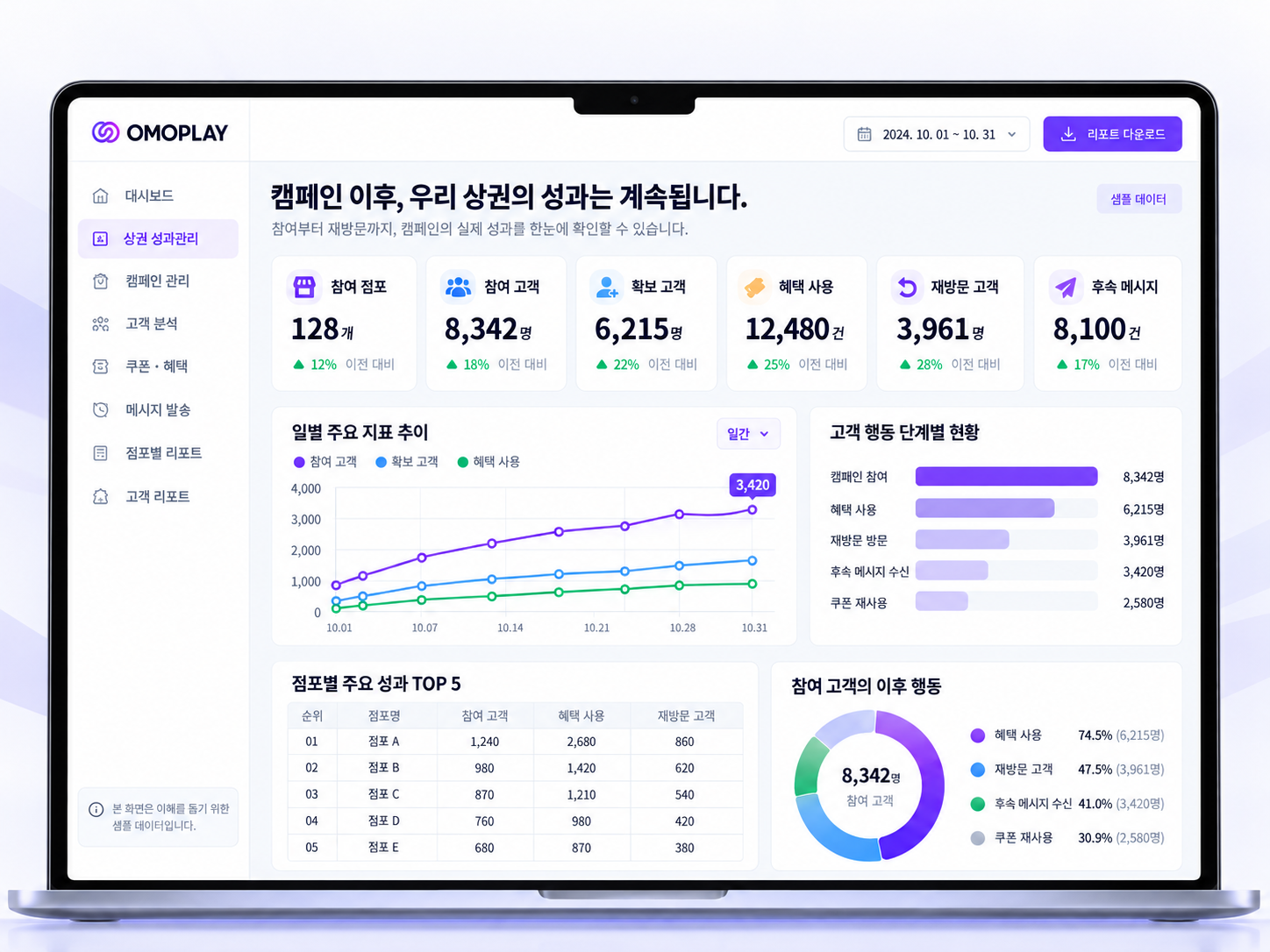
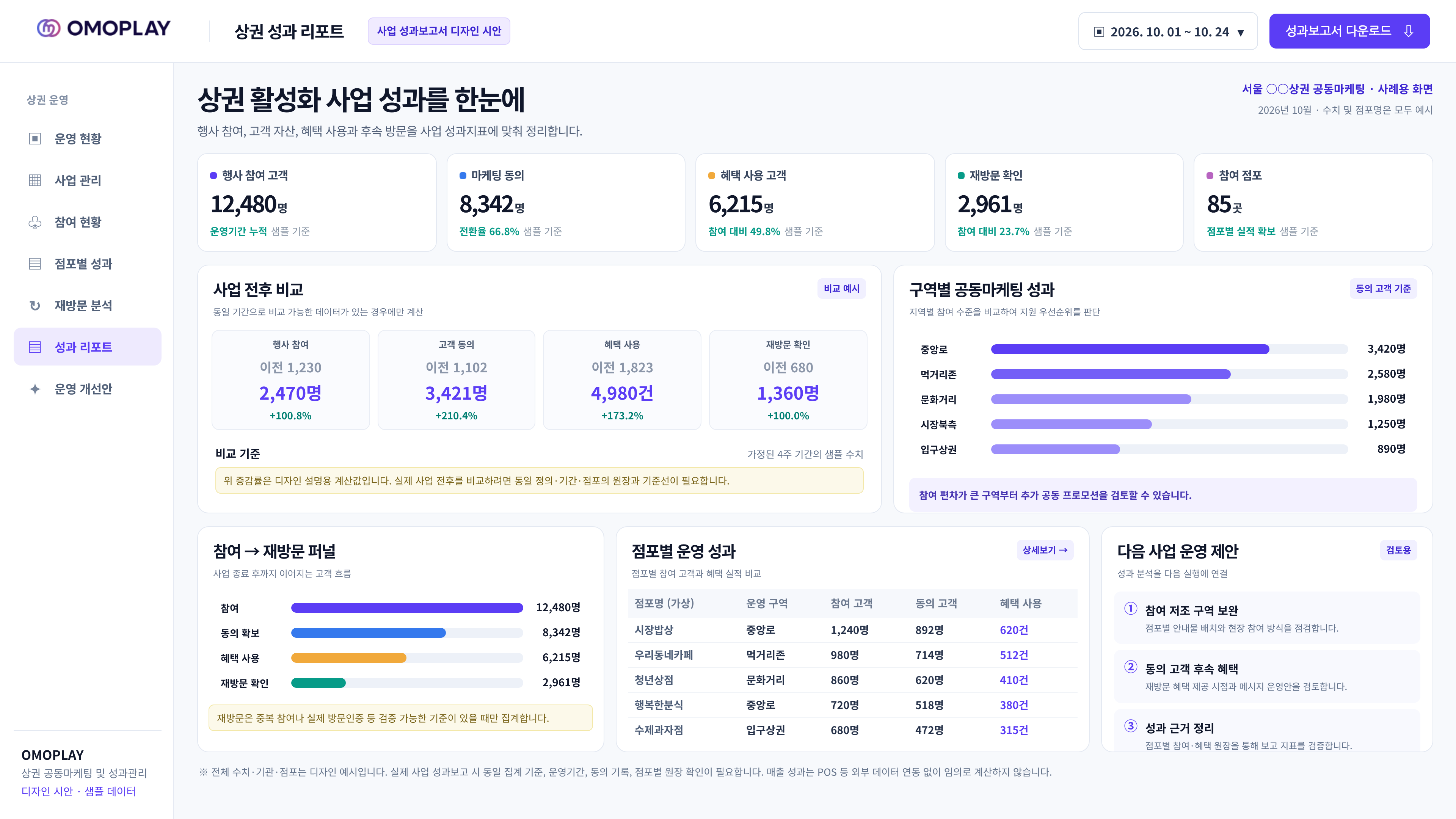
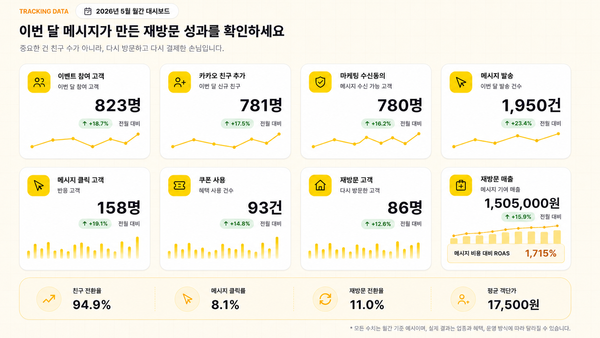
OMOPLAY district dashboard showing participating stores, participants, acquired customers, benefit use and follow-up visits. The image contains sample data.

Could this work for your district?

Let’s discuss an approach for your traditional market, neighborhood shopping street or local district.

Discuss Your District's Needs
Integrated district dashboard

Your district's customers and results, together.

Track participating stores, customer acquisition, benefit use and return visits through key operating metrics.

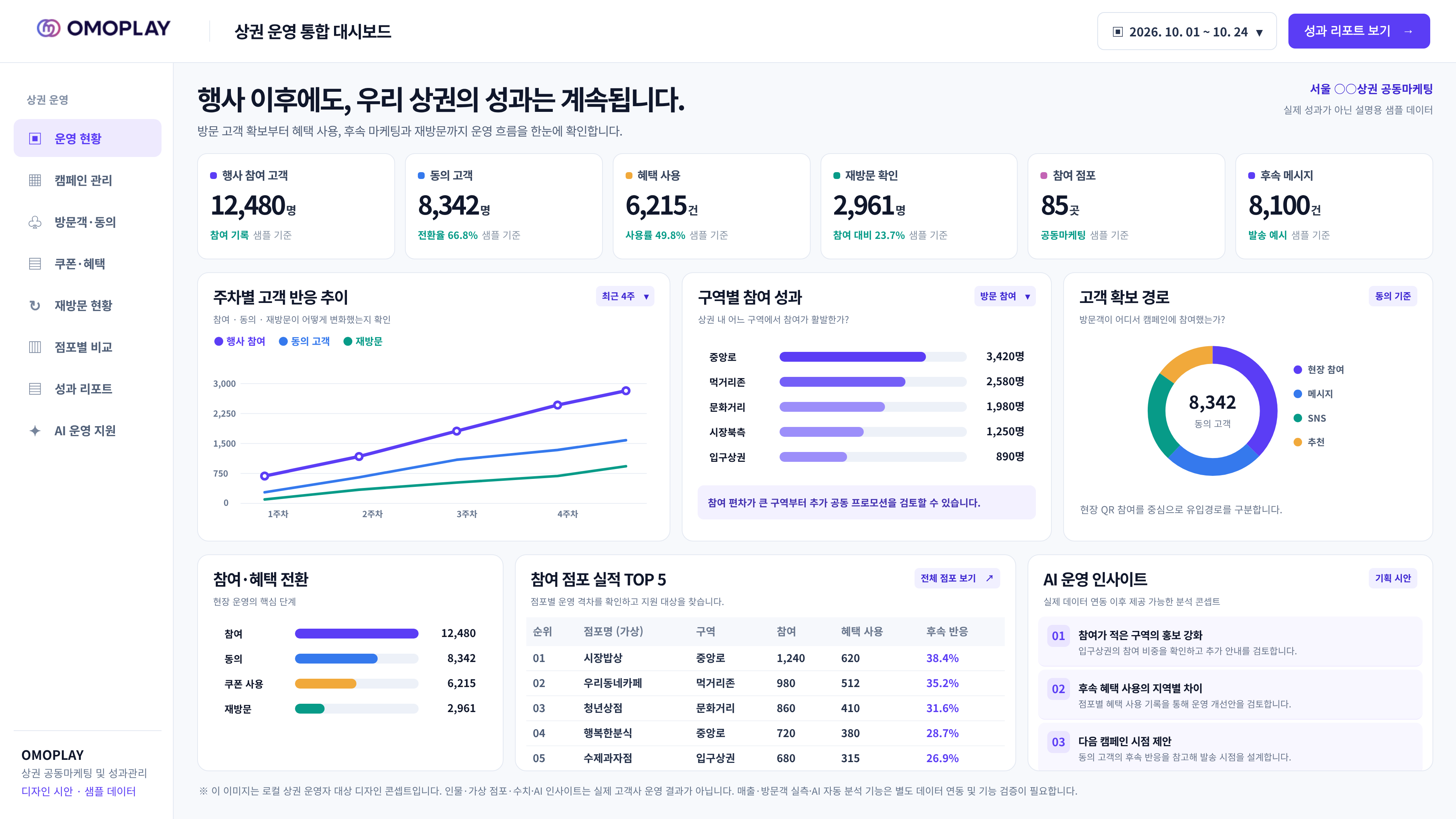
Dashboard illustration showing participating and consenting customers, benefit use, follow-up messages and weekly trends
Participating Stores
Identify stores with recorded event participation.
Event Participations
Count recorded event participation during the operating period.
Customers acquired
Count customers with the required consent, without duplicates.
Benefit uses
Track recorded use of issued benefits.
Return-Visit Coupons Redeemed
Separate benefit use from follow-up campaigns.
Returning Customers
Count when separate visit-verification data is connected.
Project performance report

Review your project's results, and plan what comes next.

Organize store participation and benefit-use records to report results and prepare the next joint marketing campaign.

Store-level results
Review participation and benefit-use records using consistent definitions.
Period comparisons and evidence
Review comparable periods and registered supporting records.
Export reporting data
Save verified totals as CSV or print them.
Report illustration comparing participation, acquisition and benefit use before and after a project, with store-level results
OMOPLAY District Performance Report

Your district's results at a glance.

View participation, customer acquisition, benefit use and return visits together in one operating report.

Apr 1, 2026 – Sep 30, 2026Six-month operation
Participating stores
20 stores
Event Participation
11,950 events
Consenting members acquired
7,100 people
New KakaoTalk Channel Friends
5,760 people
On-site benefit uses
2,750 events
Return-Visit Coupons Redeemed
885 events
Follow-Up Messages Sent
9,450 events
Members acquired per participant
59.4%
Return-coupon uses per message sent
9.4%
Estimated purchases from coupon use
15,930,000 KRW

Estimated coupon-linked purchases = return-coupon uses 885 uses × assumed average spend 18,000 KRW.

Assumed daily visits per store
50 events
Estimated visits over six months
183,000 eventsSum of individual store visits
Assumed average spend
18,000 KRW

Six months of customer growth

Cumulative new consenting members and KakaoTalk friends

Consenting members, cumulativeNew KakaoTalk friends, cumulative
Monthly cumulative members and KakaoTalk friendsApr: Members 850 people, KakaoTalk Channel Friends 680 people; May: Members 1,830 people, KakaoTalk Channel Friends 1,480 people; Jun: Members 2,930 people, KakaoTalk Channel Friends 2,380 people; Jul: Members 4,160 people, KakaoTalk Channel Friends 3,380 people; Aug: Members 5,560 people, KakaoTalk Channel Friends 4,515 people; Sep: Members 7,100 people, KakaoTalk Channel Friends 5,760 people02,0004,0006,0008,000AprMayJunJulAugSep
Members7,100 peopleKakaoTalk Channel Friends5,760 people

Performance by zone

Total results, April–September 2026

Central Street5,200 events
Food Alley4,100 events
Neighborhood District2,650 events

Participating stores: Central Street 8, Food Alley 7, Neighborhood District 5

Monthly operating results

Monthly results and totals, April–September 2026
MonthEvent Participation( events)New consenting members( people)New KakaoTalk friends( people)On-site benefit uses( events)Follow-Up Messages Sent( events)Return-Visit Coupons Redeemed( events)
Apr1,42085068030000
May1,6509808003551,10080
Jun1,8501,1009004401,500125
Jul2,0701,2301,0004851,900175
Aug2,3501,4001,1355502,300220
Sep2,6101,5401,2456202,650285
Total11,9507,1005,7602,7509,450885

Operating results by zone

Six-month results by zone
ZoneStoresParticipationConsenting members (people)New friendsReturn coupons
Central Street85,2003,0902,500380
Food Alley74,1002,4401,960300
Neighborhood District52,6501,5701,300205
Total2011,9507,1005,760885

Operating performance summary

  • Consenting members acquired over six months: 7,100 people acquired.
  • New KakaoTalk friends reached a cumulative 5,760 people in total.
  • Follow-up messages 9,450 sent, followed by return-coupon uses: 885 events recorded.
  • Central Street recorded the most customer participation.

For the next joint campaign

Review participation guidance and benefits in the Neighborhood District, where participation per store is lower, and compare its approach with Central Street.

AI customer management workflow

Bring your district’s customers back with AI.

Use visit and benefit-use data to draft return-visit messages, then have staff review and send them.

  1. 01

    Review customer data

    Staff review visit history and benefit use.

  2. 02

    AI Message Draft

    Draft messages for the benefits and conditions you want to share.

  3. 03

    Staff review and send

    Review the wording, audience and benefits before sending.

OMOPLAY message editor showing a return-coupon draft, condition options and staff review steps
Return-visit message drafts
Write coupon and event messages
Condition-based messaging
Check customer criteria and recipients
Staff review and send
Review the copy and benefits before sending
Use Cases

Local commercial development, tailored to your district.

From neighborhood shopping streets to local districts. Joint marketing turns visitors into participants, and customer management keeps the relationship going after the event.

Preparing a Glocal District, Local Theme District, Promising Neighborhood District or Centennial Market project? Let’s discuss participation and return-visit operations suited to local identity and project requirements.

Service illustration of QR participation and customer connections in Traditional Market. Metrics in the image are not actual operating results.
Traditional Market Marketing

Turn Market Visits into Lasting Relationships.

Project Objective
Help market visitors discover store offers and stay connected after the campaign ends.
Challenge to Solve
Losing contact with customers after the event

Program Activities

  • Joint market promotion and on-site QR participation
  • Spending incentives by store
  • Follow-up benefits for opted-in customers
Performance Indicators

Program participation / Membership and consent conversion / Benefit uses

Discuss an approach for your district
Joint Marketing Calculator

Estimate your district’s project impact.

Enter stores, average visits, duration and conversion assumptions to estimate customer acquisition and return visits.

01 Enter your project conditions

Project conditions

Estimate friends, members and responses to a single message over your operating period.

stores
events
%
%
%
%
KRW
%

Visits are based on monthly entry records . Total monthly entries: 5,000 events

Adjust existing customers, overlap and sending conditions
people
people
%
%
%
days
%
KRW
View projected results ↓

Projected customers and return visits

6 months of assumed operations20 storesYou can edit the inputs directly
6-month projected Kakao friends1,640 people

Members 1,092 people, unique customers 2,405 people

Total monthly entries5,000 events
Event Participation1,750 events
New friends220 people
New members147 people

New monthly participants: 1,225; unique new customers: 323. 6-month total entries: 30,000 entries.

Projected results after one message

6-month point, within 14 days after sending
Reachable customers1,924 people
Estimated Returning Customers307 people
Expected benefit users67 people
Estimated Purchases from Return Visits₩5,526,000
Estimated return-visit sales per store
₩276,300
Estimated sales from benefit users
₩1,206,000

Benefit users are included in returning customers. Do not add the two sales figures together.

Projected monthly friends and members

● Kakao friends● Members
Friends and members calculated from your assumptions, from month 0 to month 6. Exact figures are available in the monthly table below.08201,6400 months3 months6 months
View monthly figures
Projected monthly customer base under your assumptions
PeriodKakaoTalk Channel FriendsMembersUnique customers
0 months320 people210 people467 people
1 months540 people357 people790 people
2 months760 people504 people1,113 people
3 months980 people651 people1,436 people
4 months1,200 people798 people1,759 people
5 months1,420 people945 people2,082 people
6 months1,640 people1,092 people2,405 people
Budget per new customer acquired ₩5,160
Calculation rules and definitions

Stores × monthly entries per store → participation rate → unique new participants → friends and members. Each month, apply churn to existing customers before adding new ones.

Friends and members may be the same people, so they are deduplicated rather than added. Minimum overlap prevents exceeding new customers. Reachable customers × return rate gives projected returners; benefit users are a subset. Zero stores means zero returners and sales.

Assumes one purchase and at most one benefit use per returner. Estimated sales equal returners × average spend and include benefit-user sales. Do not add repeated sends to the same customer. One month is four weeks in the schedule draft.

Number of Participating Stores
Number of stores operating during the same period.
Monthly visits per store
Monthly entry records at one store. Repeat entries by the same person may be included.
Project Duration
Assumes the same monthly visits and conversion conditions throughout.
Event participation rate
Share of monthly entry records that result in event participation.
Kakao friend conversion rate
Share of new participants who become friends, excluding repeat and existing participants.
Member conversion rate
Share of new participants who become members. They may also be Kakao friends.
Return-visit rate after a message
Assumed share of reached customers making one visit within the response window after one message.
Average Transaction Value
Assumed average payment for one purchase by one returning customer.
Benefit use among returning customers
Share of expected returners using one benefit, not the redemption rate across all issued benefits.
Current KakaoTalk Channel Friends
Friends before the project begins. The churn assumption also applies to them.
Current Members
Members before the project begins. The churn assumption also applies to them.
Friend/member overlap
Assumes overlap relative to the smaller group. A minimum overlap is applied where needed so the combined count cannot exceed new customers.
Share of unique new participants
Share of truly new customers after excluding cross-store duplicates, existing customers and repeat participation.
Monthly friend/member churn
Apply the same monthly churn to existing friends, members and overlapping customers, then add new customers.
Message eligibility and reach
Share of unique customers meeting consent, channel and delivery requirements. Being a friend or member does not automatically make someone eligible.
Message response window
Choose how many days after sending to assume visits. Enter a matching return rate yourself; changing the period does not automatically increase it.
Total Joint Marketing Budget
Budget for the full project. Cost per newly acquired customer is calculated for reference.

District Revitalization Planner

Build a joint marketing plan for your district.

Choose a district type, project goal and duration to outline execution and returning-customer operations.

01 Tell us about your district

Your district’s situation

Prepare the schedule and follow-up benefits using the same customer growth assumptions.

stores
events
KRW
people
people

Visits are based on monthly entry records . Total monthly entries: 5,000 events

Adjust conversions, return rate and sending conditions
%
%
%
%
%
%
%
%
days
%
KRW
View projected results ↓

District operating plan

6 months of assumed operations20 storesYou can edit the inputs directly

What the draft includes

  1. 01Recommended joint marketing program
  2. 02Visitor participation approach
  3. 03Return-visit approach
  4. 04Draft operating schedule
  5. 05Key performance indicators
  6. 06Manager checklist

Enter the conditions and select “Create planning draft”. Changing inputs clears the previous draft.

Budget per new customer acquired ₩5,160
Calculation rules and definitions

Stores × monthly entries per store → participation rate → unique new participants → friends and members. Each month, apply churn to existing customers before adding new ones.

Friends and members may be the same people, so they are deduplicated rather than added. Minimum overlap prevents exceeding new customers. Reachable customers × return rate gives projected returners; benefit users are a subset. Zero stores means zero returners and sales.

Assumes one purchase and at most one benefit use per returner. Estimated sales equal returners × average spend and include benefit-user sales. Do not add repeated sends to the same customer. One month is four weeks in the schedule draft.

Number of Participating Stores
Number of stores operating during the same period.
Monthly visits per store
Monthly entry records at one store. Repeat entries by the same person may be included.
Project Duration
Assumes the same monthly visits and conversion conditions throughout.
Event participation rate
Share of monthly entry records that result in event participation.
Kakao friend conversion rate
Share of new participants who become friends, excluding repeat and existing participants.
Member conversion rate
Share of new participants who become members. They may also be Kakao friends.
Return-visit rate after a message
Assumed share of reached customers making one visit within the response window after one message.
Average Transaction Value
Assumed average payment for one purchase by one returning customer.
Benefit use among returning customers
Share of expected returners using one benefit, not the redemption rate across all issued benefits.
Current KakaoTalk Channel Friends
Friends before the project begins. The churn assumption also applies to them.
Current Members
Members before the project begins. The churn assumption also applies to them.
Friend/member overlap
Assumes overlap relative to the smaller group. A minimum overlap is applied where needed so the combined count cannot exceed new customers.
Share of unique new participants
Share of truly new customers after excluding cross-store duplicates, existing customers and repeat participation.
Monthly friend/member churn
Apply the same monthly churn to existing friends, members and overlapping customers, then add new customers.
Message eligibility and reach
Share of unique customers meeting consent, channel and delivery requirements. Being a friend or member does not automatically make someone eligible.
Message response window
Choose how many days after sending to assume visits. Enter a matching return rate yourself; changing the period does not automatically increase it.
Total Joint Marketing Budget
Budget for the full project. Cost per newly acquired customer is calculated for reference.
Case studies

Real Change Starts on the Ground.

From traditional markets and neighborhood streets to franchises. Explore approaches and operating experience from each setting.

Staged image of a busy shopping street, not a photograph of the actual Sinchon–Ewha operation
District joint marketing

Sinchon–Ewha District, Seoul

District operations connecting on-site participation to customer acquisition and follow-up marketing

Read Case Study
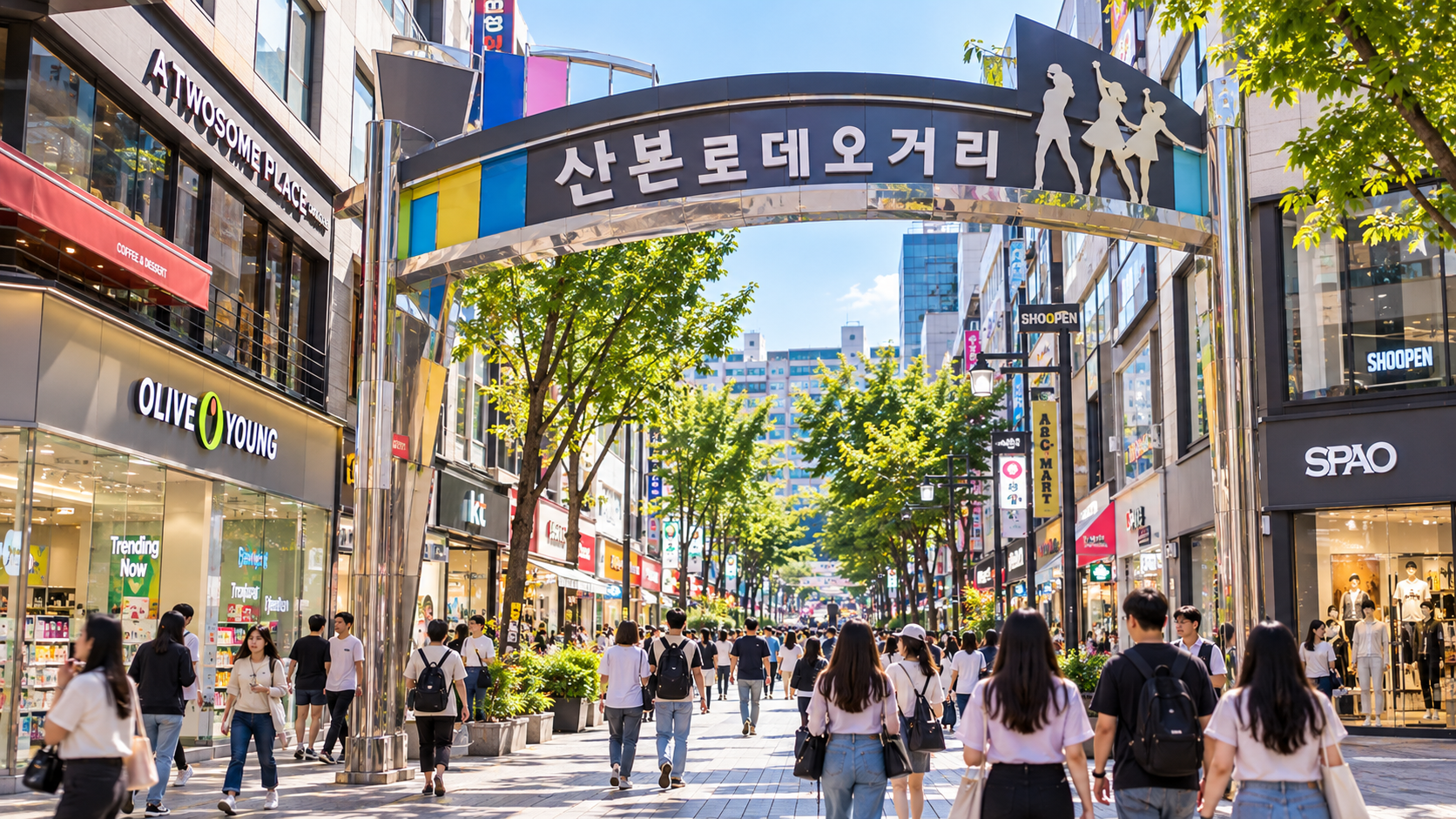
Staged image of the Sanbon Rodeo Street entrance and visitors, not a photograph of actual operations
Shopping Street Joint Marketing

Sanbon Rodeo Street, Gyeonggi

A joint marketing and customer participation pilot for a shopping street

Read Case Study
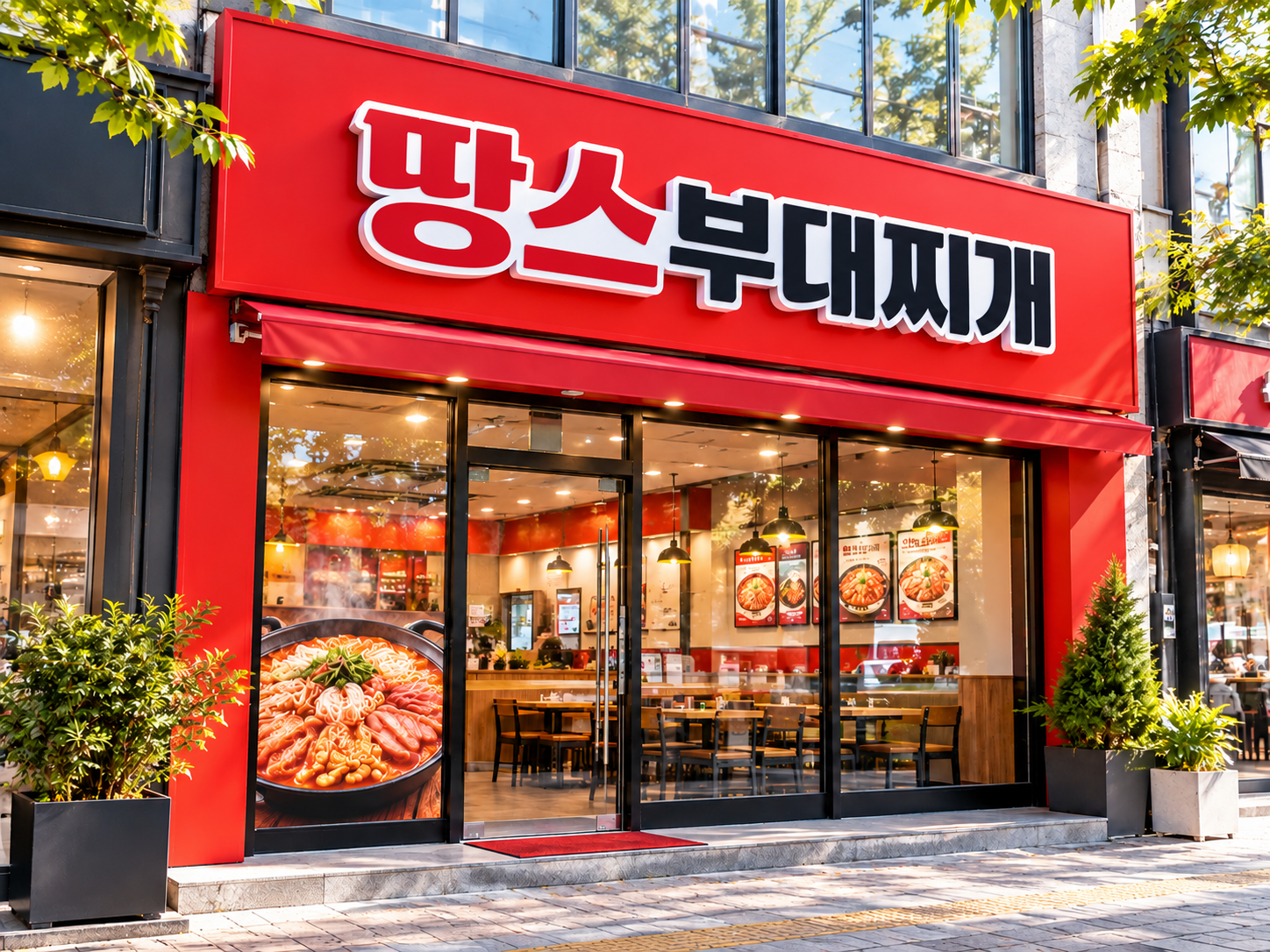
Staged TTangs Budae-jjigae storefront image, not an official store photograph or evidence of installation
Franchise implementation

Ttang's Budae Jjigae

Nationwide franchise agreement and customer management rollout plans

Implementation agreement
For franchise stores nationwide
Franchise customer management
QR participation and customer management rollout plan
Read Case Study
Before you get started

AI-powered district marketing: what to know before implementation.

For project managers We’ve gathered the essentials first.

Discuss your district

With customer consent, build a lasting relationship with your district.

01Can OMOPLAY Be Used in Traditional Markets and Shopping Streets?

Yes. We suggest on-site participation and customer connections for traditional markets, cultural tourism markets and neighborhood shopping streets. We also discuss shopping street and franchise customer management according to the roles of stores and operators.

02How can it support district renewal or city-center revitalization?

Define visitor participation and customer acquisition as operating tasks. Connect local identity content with store benefits, then use participation and redemption records to identify the next improvements to district competitiveness.

03Where does neighborhood revitalization begin?

Start by giving residents a reason to revisit nearby stores. Link joint events, membership and return benefits, and define a shared approach for stores and merchant associations to support local spending and the neighborhood economy.

04Can local revitalization connect with tourism programs?

We help design programs connecting local food, culture and travel routes with store benefits. Manage festival visitors, post-event information and return benefits to support the local economy.

05Are there limits on store count or duration?

The scope is agreed according to the number of stores and schedule. Post-event customer management can also be discussed.

06How do visitors participate?

They join using QR signage or a link at a store or venue. Depending on the program, registration and consent may be required to receive benefits.

07Can we manage customers after the event?

Yes. Send follow-up messages and coupons within the customer’s consent. Define the schedule and conditions and track redemption.

08What project results can we track?

Track participation, registration, consent, message responses, benefit issuance and use. Sales and footfall analysis require separate data integration.

09Can it connect to existing websites or store systems?

Tell us your systems and integration needs so we can confirm support. Shared district CRM, cross-store coupon settlement and POS integration require separate consultation.

10How is pricing determined?

It depends on stores, duration, message volume, field support and integrations. We explain the required items and costs during consultation.

11How are personal data and marketing consent handled?

Registration and marketing consent are separate. Information is used within the agreed scope. Collected fields and retention follow the privacy policy and project contracts.

12Which AI features are available?

We support promotional copywriting, condition-based messages and participation and benefit management. We can discuss suitable use for your project and operations.

Let’s plan your district’s next chapter.

Your district’s next results, built together.

From visitor acquisition to repeat visits and joint marketing results, let’s discuss the right approach for your district.

01Understand your district and project goals02Agree on scope and operations03A tailored implementation proposal
contact@headless.co.kr

Tell us about your district

Read the privacy policy